

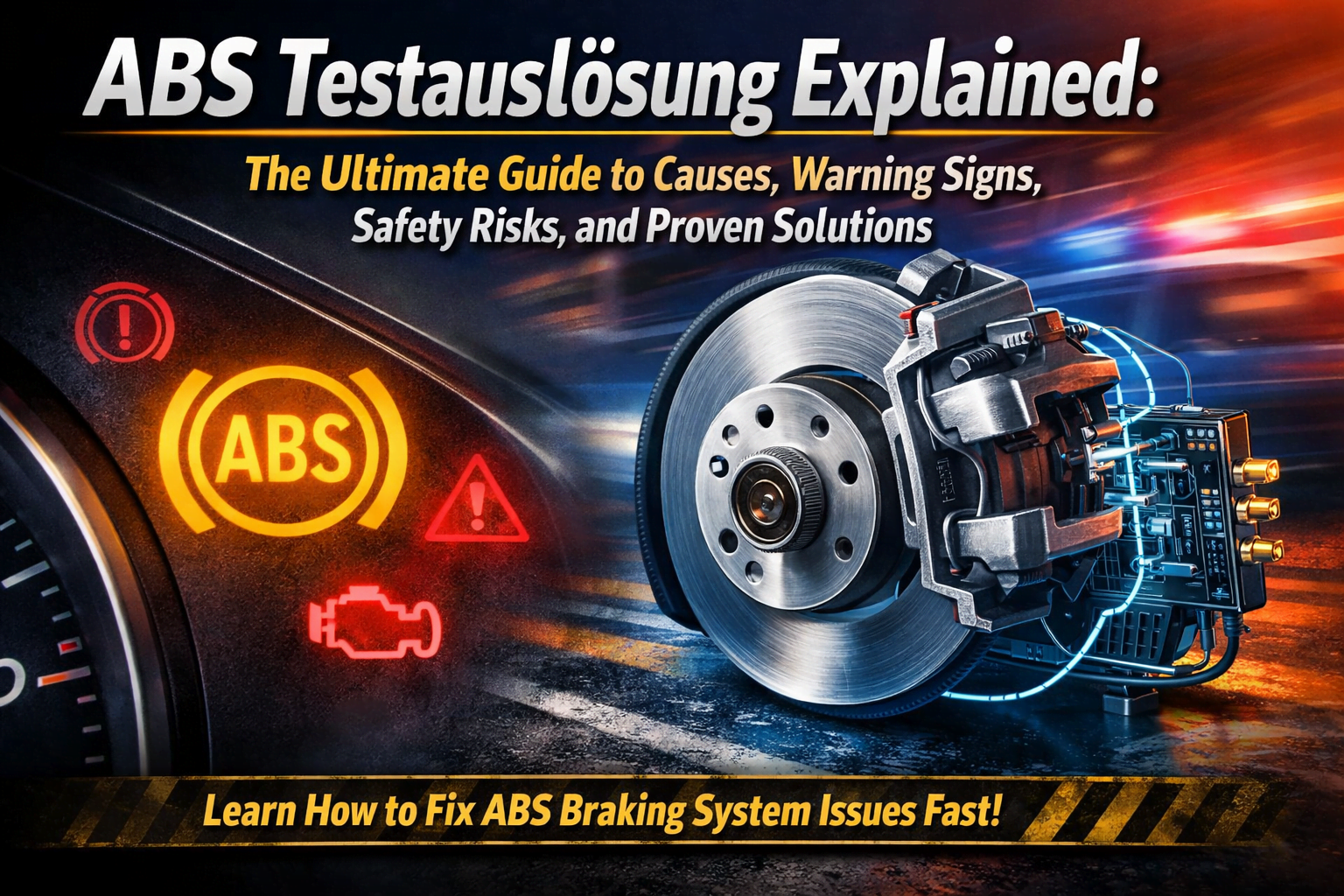
Modern vehicles are equipped with advanced safety systems designed to protect drivers in critical situations. One of the most important among them is the anti-lock braking system. When drivers encounter the term ABS Testauslösung, confusion often follows. Is it a malfunction, a warning, or a routine system check? Understanding this concept is essential for maintaining vehicle safety and preventing costly repairs. In this comprehensive guide, we explain how the system works, why activation occurs, what problems may arise, and what actions should be taken to ensure safe driving at all times.
What Is ABS Testauslösung?
The term ABS Testauslösung refers to the activation or triggering of the anti-lock braking system’s internal test function. Modern vehicles continuously monitor braking components to ensure proper performance. During startup or specific driving conditions, the system may run an automatic check. This process briefly activates certain ABS components to confirm they are functioning correctly.
Drivers may notice a slight vibration in the brake pedal or hear a subtle clicking noise during this test phase. In most cases, this is completely normal and indicates that the system is performing a self-diagnostic routine. However, if warning lights remain illuminated or unusual behavior persists, further inspection may be necessary.
Understanding this concept helps drivers distinguish between a routine system check and an actual mechanical issue. It is not always a sign of failure, but it should never be ignored if accompanied by warning indicators.
How the ABS System Works in Modern Vehicles
The anti-lock braking system is designed to prevent wheel lockup during hard braking. When wheels lock, steering control is lost, increasing the risk of skidding. ABS prevents this by rapidly modulating brake pressure.
Each wheel is equipped with speed sensors that monitor rotational speed. When the system detects that a wheel is about to lock, it reduces brake pressure momentarily and then reapplies it. This happens multiple times per second, allowing the driver to maintain steering control while braking firmly.
The system consists of sensors, a hydraulic control unit, valves, and an electronic control module. These components work together seamlessly to ensure optimal braking performance. During startup, the control module often performs a system check to verify communication between all parts. This internal testing phase is part of the vehicle’s safety design and ensures the system is ready when needed.
Why ABS Testauslösung Happens
There are several reasons why ABS Testauslösung may occur. The most common reason is the automatic self-check performed when the vehicle starts moving. Many drivers notice a brief activation at low speeds shortly after ignition. This is normal behavior.
Environmental factors can also trigger system responses. Wet roads, gravel surfaces, snow, or uneven terrain may cause the system to engage temporarily. When sensors detect rapid deceleration differences between wheels, the system reacts instantly to maintain traction.
In some cases, activation may indicate minor irregularities such as sensor contamination or electrical fluctuations. Road debris, dirt buildup, or corrosion can interfere with accurate sensor readings. While occasional activation during slippery conditions is expected, frequent or unexplained triggering may suggest a need for inspection.
Understanding the context of activation helps determine whether the behavior is routine or a sign of developing issues.
Common Problems Related to ABS Activation
Although the system is highly reliable, certain problems may be associated with ABS Testauslösung events. Faulty wheel speed sensors are among the most common causes. When sensors fail or provide inaccurate data, the control unit may respond unnecessarily.
Damaged wiring or loose electrical connections can also lead to irregular system behavior. Modern vehicles rely heavily on electronic communication, and even minor wiring issues can disrupt performance.
Another potential issue involves the hydraulic control unit. If valves inside the unit malfunction, brake pressure modulation may become inconsistent. Drivers might feel unexpected pedal pulsation even when braking normally.
In some cases, low battery voltage or alternator problems can trigger warning lights. Because the system depends on stable electrical input, voltage instability may interfere with diagnostics and create false alerts.
Timely attention to these warning signs prevents more expensive repairs and ensures that the braking system remains dependable.
Diagnosis and Repair Process
When persistent activation or warning lights appear, professional diagnosis is essential. Technicians use specialized diagnostic scanners to read fault codes stored in the vehicle’s control module. These codes pinpoint the affected component, whether it is a sensor, wiring connection, or hydraulic unit.
Inspection typically begins with wheel speed sensors. Mechanics check for physical damage, corrosion, and debris buildup. Cleaning or replacing faulty sensors often resolves the issue.
If electrical problems are suspected, technicians examine wiring harnesses and connectors for damage. Voltage testing ensures proper power supply to the system.
When hydraulic components are involved, more extensive repairs may be necessary. Replacing a control module or hydraulic unit requires expertise and precision.
Addressing ABS Testauslösung concerns promptly reduces safety risks and prevents additional strain on related components. Regular maintenance checks help detect small issues before they escalate.
Is It Safe to Drive After ABS Test Activation
The safety implications depend on the circumstances surrounding ABS Testauslösung. If activation occurs briefly during startup without warning lights, it is generally safe to continue driving. This scenario typically reflects a routine self-test.
However, if the ABS warning light remains illuminated on the dashboard, the system may be partially or completely disabled. In such cases, the vehicle will still have conventional braking capability, but anti-lock functionality will not operate during emergency stops.
Driving without ABS increases the risk of wheel lockup on slippery roads. While standard brakes remain functional, reduced control during sudden braking can compromise safety.
If unusual noises, vibrations, or dashboard alerts persist, scheduling a professional inspection is strongly recommended. Ignoring these signals may lead to more severe braking system complications over time.
Importance of ABS in Road Safety
The significance of ABS Testauslösung becomes clearer when considering the broader role of ABS in vehicle safety. Anti-lock braking systems have significantly reduced accident rates by improving control during emergency braking.
Maintaining steering ability during sudden stops allows drivers to avoid obstacles more effectively. This technology is especially valuable in wet, icy, or uneven road conditions where traction is limited.
Modern safety systems such as electronic stability control and traction control often rely on ABS components. When ABS functions correctly, these integrated systems also perform optimally.
Regular monitoring and maintenance of the braking system ensure that safety mechanisms remain fully operational. Drivers who understand how these systems function are better equipped to respond appropriately to warning signs.
Conclusion
Understanding ABS Testauslösung empowers drivers to differentiate between normal system checks and potential malfunctions. In many cases, brief activation is simply part of the vehicle’s self-diagnostic process. However, persistent warnings or irregular behavior should never be ignored.
By maintaining wheel sensors, monitoring dashboard indicators, and seeking timely professional diagnostics, we ensure that braking performance remains reliable. The anti-lock braking system plays a critical role in modern road safety, and proper maintenance protects both vehicle occupants and others on the road.
Also Read More
Mmsbre: The Meaning Behind the Internet’s Most Mysterious Keyword
Beit Bart: A Cultural Sanctuary Where Art, History, and Community Converge
Oncepik: A Modern Productivity Tool Built for Creative Workflows


