

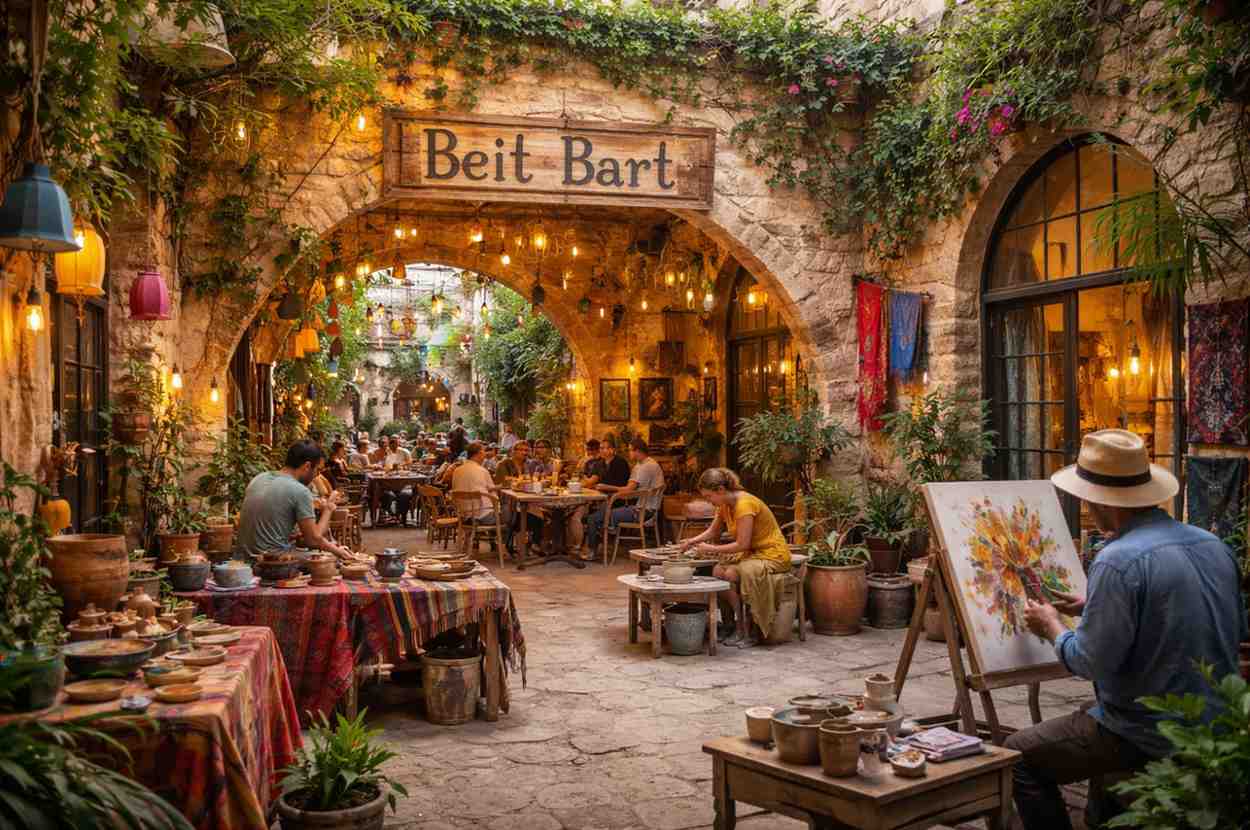
The name Beit Bart often surfaces in conversations about art, culture, and community-driven spaces. It evokes images of workshops filled with color, courtyards echoing with conversation, and walls that carry the memory of past generations. More than just a place, it represents a shared idea about creativity and belonging. Travelers, artists, and cultural observers are drawn to its quiet energy and human warmth. What makes this space stand out is not only its artistic activity but the atmosphere of connection it creates, where tradition and modern expression exist side by side.
The Meaning Behind Beit Bart
Beit Bart refers to a cultural space that blends artistic expression with community life. The name itself carries a sense of familiarity, suggesting a house or gathering place where people come together to create, learn, and exchange ideas. In many discussions, it is described not simply as a building but as a living environment shaped by the people who pass through it.
Visitors often find a mix of artistic disciplines under one roof. Painters might be working in open studios while musicians rehearse in another corner. Craftspeople share techniques that have been handed down through generations. The environment feels organic, shaped by the rhythm of daily creative life rather than rigid programming.
This cultural hub has earned attention because it reflects the idea that art thrives in shared spaces. Instead of separating artists from the public, it invites everyone into the process. Guests are not just observers; they become part of the atmosphere, contributing their curiosity and presence to the experience.
Cultural Meaning and Creative Roots
The cultural meaning of Beit Bart lies in its emphasis on community and storytelling. Every artwork created within its walls becomes part of a broader narrative about identity, heritage, and expression. The space often highlights local traditions while allowing room for new interpretations.
Artists who work here tend to draw inspiration from their surroundings. Textiles, ceramics, murals, and installations reflect the textures and colors of everyday life. Instead of focusing solely on commercial success, the emphasis is placed on authenticity and connection.
This creative space embodies the idea that culture is not static. It evolves through conversations, collaborations, and shared experiences. Workshops and small gatherings allow artists and visitors to exchange ideas, turning the environment into a living dialogue rather than a silent exhibition hall.
Historical Background
The historical background of this artisan community reveals how creative spaces often grow from humble beginnings. Many such places begin as ordinary homes or workshops before gradually transforming into centers of cultural activity. Over time, the structure itself becomes part of the story, absorbing the energy of the artists and residents who shape it.
In the case of Beit Bart, its history is often linked to the idea of preserving artistic traditions while adapting to modern influences. Early occupants may have used the space for craft or trade, slowly turning it into a gathering point for like-minded creators. As word spread, more artists joined, bringing their own styles and perspectives.
What makes the history of this cultural center compelling is the way it reflects broader social changes. As communities evolve, spaces like this become anchors for creativity and continuity. They preserve memories while allowing new voices to emerge, ensuring that culture remains dynamic and alive.
Beit Bart as a Creative Community
At its heart, Beit Bart functions as a creative community rather than a formal institution. The atmosphere tends to feel open and welcoming, with artists working side by side in shared studios. Conversations flow easily, and collaborations often arise naturally.
This artisan community thrives on the exchange of skills and ideas. A ceramicist might learn color techniques from a painter, while a musician draws inspiration from the patterns of a textile artist. These interactions create a sense of unity that extends beyond individual disciplines.
The space also encourages visitors to engage directly with the creative process. Instead of simply viewing finished works, they can watch artists at work or even participate in small workshops. This approach breaks down the barrier between creator and audience, turning art into a shared experience.
Why It Matters in Modern Culture
In modern culture, where digital experiences often replace physical interaction, spaces like Beit Bart hold special significance. They remind people of the importance of tangible creativity and face-to-face connection. The presence of real materials, real conversations, and real craftsmanship creates an atmosphere that cannot be replicated online.
This cultural hub also plays a role in preserving traditional art forms. By providing a space for artisans to practice and teach their crafts, it helps keep cultural knowledge alive. Younger generations can learn directly from experienced creators, ensuring that skills and stories are not lost.
At the same time, the environment remains open to contemporary expression. New media, experimental art, and cross-cultural influences are welcomed. This balance between tradition and innovation makes the space relevant to modern audiences.
The Appeal for Artists and Travelers
Artists are drawn to Beit Bart because it offers both inspiration and community. Working in isolation can be challenging, but a shared creative environment provides encouragement and fresh perspectives. The presence of other creators fosters motivation and sparks new ideas.
Travelers, on the other hand, find the space appealing because it offers an authentic cultural experience. Instead of visiting a formal museum, they step into a living environment where art is part of daily life. The sounds, textures, and conversations create a deeper sense of connection than traditional tourist attractions.
This creative space also provides a slower, more reflective kind of travel experience. Visitors can spend time observing, talking with artists, or participating in workshops. The experience becomes less about ticking off destinations and more about meaningful encounters.
Conclusion
Beit Bart represents more than a physical location; it embodies a philosophy of shared creativity and cultural continuity. Its identity as a cultural hub comes from the people who fill it with life, from painters and musicians to curious visitors and local residents. The atmosphere it creates is one of openness, conversation, and artistic exploration.
What makes this cultural center special is its ability to connect past and present. It preserves traditional crafts while welcoming modern ideas, creating a space where culture evolves naturally. For artists, it offers inspiration and community. For travelers, it provides a glimpse into a living artistic world.
In an age dominated by fast-paced digital experiences, spaces like this remind us of the value of human connection and handmade expression. The story of Beit Bart continues to attract those who seek authenticity, creativity, and a deeper understanding of culture.
Also Read More
The Definitive Guide to NTDTVJP: Redefining Independent Media in Japan
Fontlu Meaning: What It Is and Why People Are Searching for It


