

Introduction
Most homeowners start thinking about garage door insulation after noticing the same pattern every year. The garage feels like an oven in summer, an icebox in winter, and the rooms next to it never stay comfortable. Energy bills climb, stored items suffer, and using the garage as a workspace becomes frustrating. What many people don’t realize is that the garage door is often the largest uninsulated surface on the house. Fixing that single weak point can noticeably improve temperature control, reduce noise, and make the entire space more usable without major renovation.
Why are Homeowners Searching for Garage Door Insulation?
Most people land on this topic for one of three reasons. Their garage is freezing in winter or unbearable in summer. Their energy bills keep creeping up. Or the garage has turned into a workspace, gym, or storage area where temperature and noise suddenly matter. Garage door insulation directly affects all three. An uninsulated garage door is often the biggest weak spot in the entire home’s thermal envelope, even when the walls are insulated properly.
What Exactly is Garage Door Insulation?
Garage door insulation is a thermal barrier added to the inside of a garage door to slow heat transfer between the garage and the outdoors. It helps keep cold air out in winter and heat out in summer. Insulation is typically measured by its R-value, which tells you how well it resists heat flow. The higher the R-value, the better the insulation performance. Beyond temperature control, insulation also reduces noise, strengthens the door, and helps protect items stored inside the garage.
Does Insulating a Garage Door Actually Save Energy?
Yes, but with context. If your garage is attached to your home, insulation can noticeably reduce heat loss through shared walls and ceilings. This means your HVAC system runs less often, especially in extreme weather. Homeowners often see improved comfort in rooms above or next to the garage. While garage insulation alone won’t slash energy bills overnight, it closes a major efficiency gap that many homes overlook.
What are the Most Common Types of Garage Door Insulation?
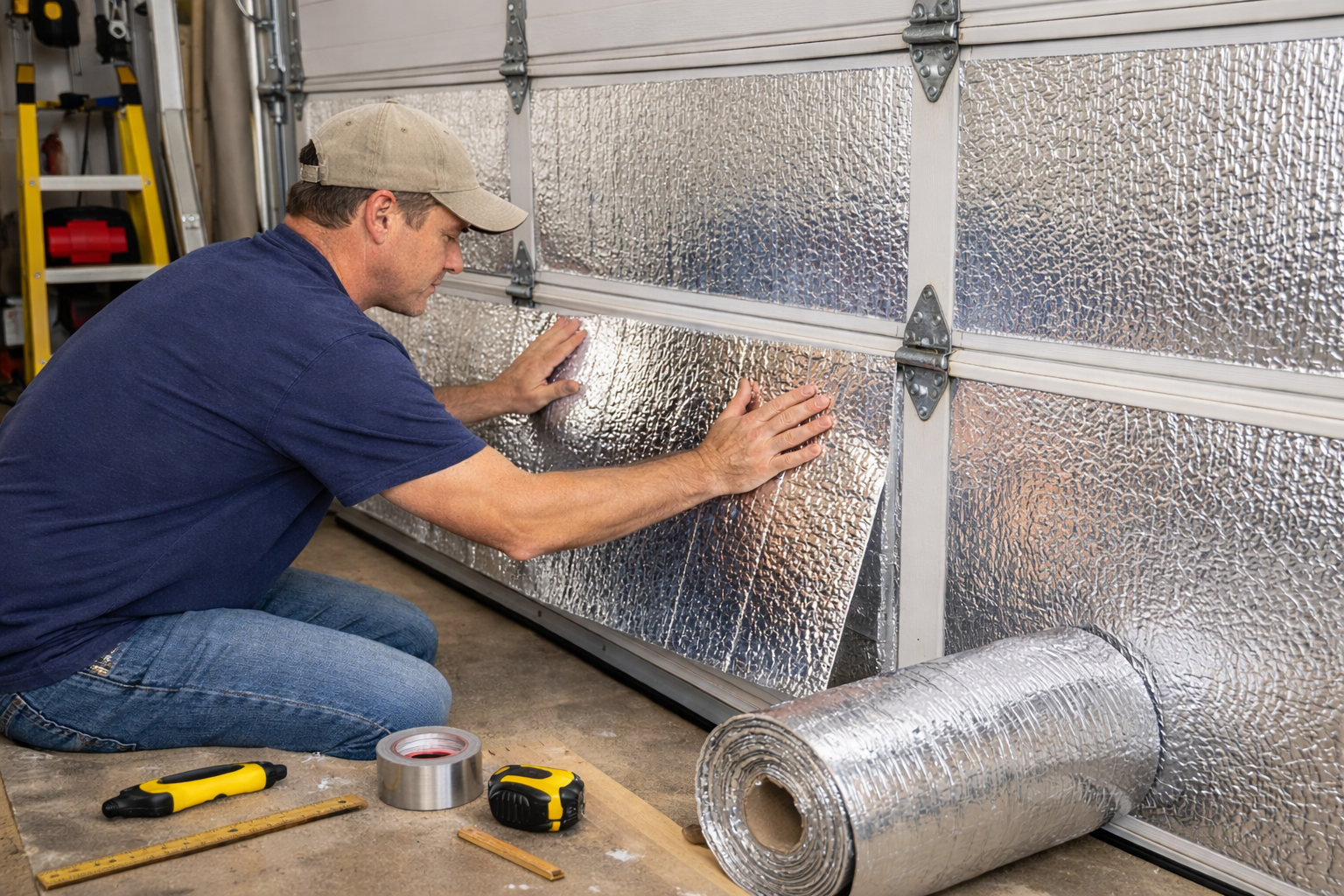
There are three materials used most often. Polystyrene panels are rigid foam boards that fit neatly into door panels and are popular for DIY projects. Polyurethane foam is injected or factory-installed and offers the highest R-value but usually comes with insulated doors rather than retrofits. Reflective insulation uses aluminum foil layers to reflect radiant heat and works best in hot climates. Each option balances cost, performance, and installation complexity differently.
How Much Insulation Do You Really Need for Your Climate?
Climate matters more than people think. In mild regions, an R-value between R-6 and R-9 is usually sufficient. Colder climates benefit from R-12 to R-18 insulation, especially if the garage shares walls with living space. Hot climates often focus more on radiant heat reduction than raw R-value. Over-insulating can be unnecessary, but under-insulating often leads to wasted money and disappointment.
Can You Insulate an Existing Garage Door, or Do You Need a New One?
Most existing garage doors can be insulated without replacement. Steel and aluminum doors are especially good candidates. Wood doors can be insulated, but moisture control becomes more important. If the door is old, damaged, or thin, replacing it with a factory-insulated model may be more cost-effective long term. New insulated doors also improve durability and noise reduction better than most retrofit kits.
Is DIY Garage Door Insulation Worth it?
DIY insulation kits work well when installed correctly. They are affordable, accessible, and effective for moderate insulation needs. However, mistakes are common. Gaps between panels, compressed insulation, or blocked door hardware reduce effectiveness and can create safety issues. If your garage door has torsion springs or complex hardware, professional installation reduces risk and ensures balanced door operation.
Does Garage Door Insulation Reduce Noise?
Yes, significantly. Insulated doors absorb vibrations and block sound transmission better than hollow doors. This matters if you use power tools, play music, or live near a busy street. It also works both ways. Less outside noise enters the garage, and less internal noise escapes, which neighbors usually appreciate.
How Long Does Garage Door Insulation Last?
Quality insulation can last 10 to 20 years with minimal maintenance. Foam panels and polyurethane insulation hold up well if kept dry and properly installed. Reflective insulation may degrade faster in harsh conditions. Regular inspection helps catch sagging panels or moisture buildup before performance drops.
Is Garage Door Insulation Worth it if the Garage isn’t Heated?
In most cases, yes. Even unheated garages benefit from insulation because it stabilizes temperatures. This protects stored items, reduces condensation, and improves comfort in adjacent rooms. If the garage is attached to the house, insulation almost always makes sense regardless of heating status.
How does Garage Door Insulation Compare to Wall or Ceiling Insulation?
Garage door insulation works differently. Walls and ceilings provide consistent coverage, while the door is a moving component exposed to weather changes. Because garage doors are thinner than walls, insulating them delivers a noticeable improvement quickly. However, maximum efficiency comes from combining door insulation with wall and ceiling insulation rather than treating it as a standalone fix.
Are Insulated Garage Doors Better than Insulation Kits?
Factory-insulated doors generally perform better. They have higher R-values, stronger construction, and better sealing. However, they cost more upfront. Insulation kits are a practical upgrade when the existing door is in good shape. The best choice depends on budget, climate, and how long you plan to stay in the home.
What does Garage Door Insulation Typically Cost?
DIY insulation kits usually range from low to mid-range pricing depending on material and door size. Professional insulation or door replacement costs more but includes labor, balance adjustment, and warranties. Over time, energy savings and comfort improvements often justify the investment, especially in extreme climates.
Are there safety concerns with insulating a Garage Door?
Yes, but they’re manageable. Added weight affects door balance, which can strain springs and openers. Improper installation can interfere with tracks or safety sensors. Always follow manufacturer guidelines, and if the door feels heavier after insulation, a professional adjustment is smart, not optional.
Conclusion
Garage door insulation is one of those upgrades that quietly improves comfort, efficiency, and usability without changing how your home looks. When chosen correctly for your climate and installed properly, it reduces energy loss, dampens noise, and protects your space year-round. Whether you go DIY or professional, treating the garage door as part of your home’s insulation system rather than an afterthought makes a measurable difference.
Frequently Asked Questions About Garage Door Insulation
Does garage door insulation help with humidity control?
It helps indirectly by reducing temperature swings that cause condensation. Combined with proper ventilation, insulation limits moisture buildup.
Can insulated garage doors prevent freezing pipes?
They reduce risk but don’t guarantee protection. Insulation slows heat loss but doesn’t replace proper pipe insulation or heating in extreme cold.
Will insulation damage my garage door over time?
Not if installed correctly. Moisture control and proper fastening prevent warping or corrosion.


