

Introduction
Cevurı is a beloved dish in Turkish cuisine, deeply rooted in the traditions and culinary heritage of the country. Known for its rich combination of lamb and beef, Cevurı is often associated with communal meals and celebrations. This hearty dish is not only popular for its delicious flavor but also for its historical connection to family gatherings and special occasions. The preparation of Cevurı requires skill and patience, and it is often passed down from generation to generation, making it a symbol of family bonding and cultural pride.
The dish is a testament to the diversity of Turkish cooking, where each region adds its own twist to the preparation. What makes Cevurı so significant is the way it embodies the essence of Turkish hospitality, bringing people together to share a meal that has been enjoyed for centuries. Whether served at a local eatery or prepared at home, Cevurı represents more than just food; it represents a piece of Turkish heritage and the warmth of Turkish culture.
History and Origins of Cevurı in Turkish Cuisine
Cevurı’s history can be traced back to the ancient culinary traditions of the Turkish people. The dish is believed to have originated in the Anatolian region, where lamb and beef were staples in the diet due to the area’s agricultural practices. Over time, Cevurı became a popular choice for large gatherings and celebrations, especially among families in rural regions who had access to fresh meat.
In ancient times, the preparation of Cevurı was a communal activity. People would come together to prepare the dish, often cooking it over open flames or in large clay ovens. This communal aspect is still reflected in modern-day celebrations where families and friends gather to enjoy a meal of Cevurı.
The roots of Cevurı are also intertwined with the rich cultural history of the Ottoman Empire, where the fusion of flavors from various regions created a diverse culinary landscape. The dish is a reflection of this fusion, incorporating ingredients and cooking techniques that span generations, while maintaining its authenticity as a traditional Turkish delicacy.
Traditional Ingredients Used in Cevurı
The traditional ingredients of Cevurı revolve around high-quality meats, particularly lamb and beef. These meats are carefully selected for their tenderness and flavor, ensuring that the final dish is both rich and satisfying. While lamb is the preferred meat in many variations, beef is often added to enhance the dish’s depth of flavor.
Alongside the meats, the seasoning plays a critical role in bringing out the unique taste of Cevurı. Common ingredients include garlic, onions, and a mix of Turkish spices such as cumin, black pepper, and paprika. These ingredients are combined to create a balanced and aromatic profile, where the spices enhance the natural flavors of the meat without overpowering them.
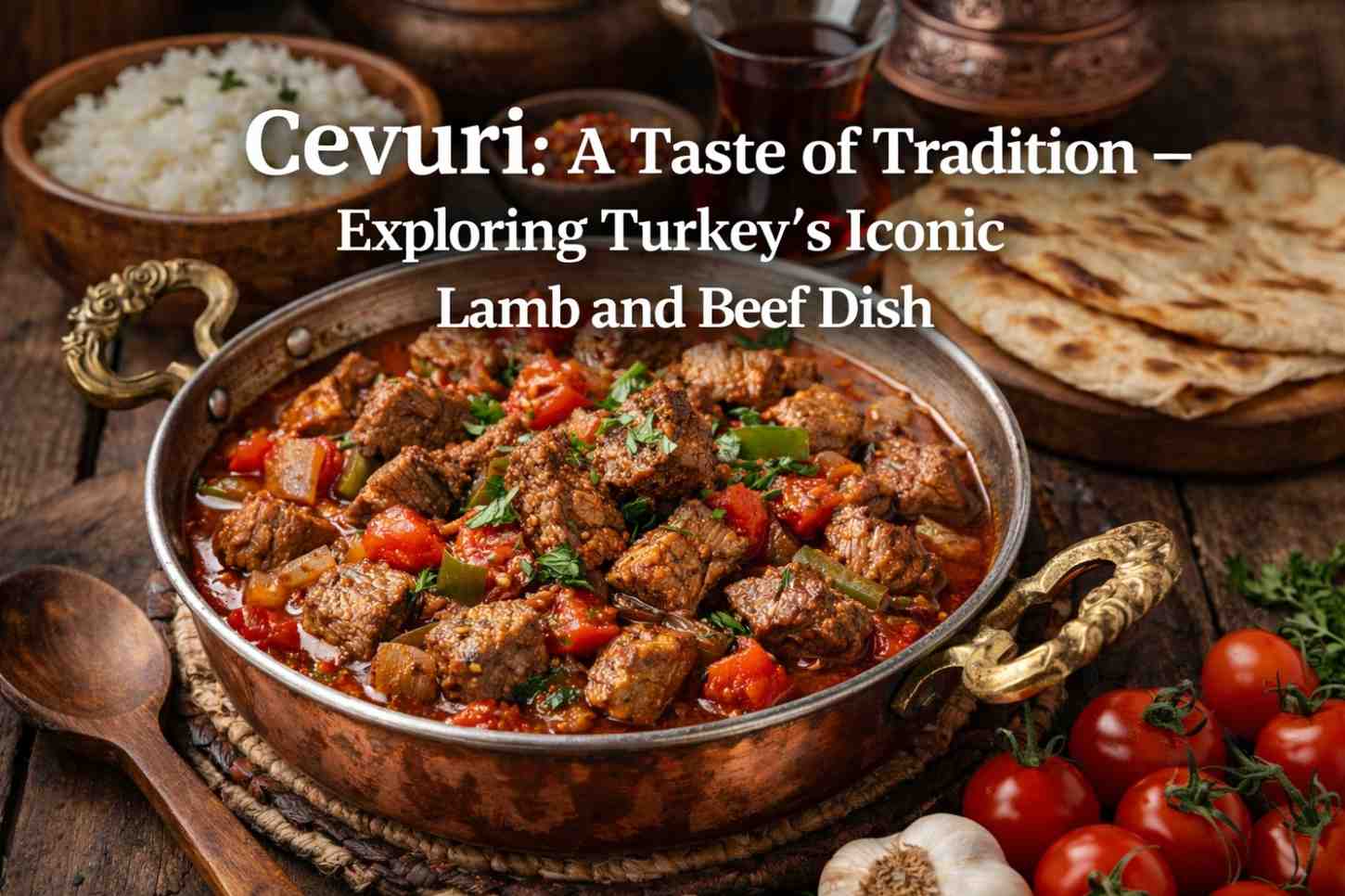
The dish is often cooked with vegetables like tomatoes and bell peppers, which contribute to the dish’s savory and slightly tangy taste. These vegetables are cooked down with the meat to form a rich, flavorful base that is characteristic of Cevurı. Olive oil, which is abundant in Turkish cuisine, is also used to sauté the ingredients, adding richness to the final dish.
How Cevurı Is Prepared and Cooked
Preparing Cevurı requires both skill and attention to detail. The first step is to select the right cuts of lamb and beef, ensuring that they are tender and suitable for slow cooking. The meat is typically cut into chunks or cubes, allowing it to cook evenly and absorb the flavors of the spices.
The meat is then browned in a large pot or pan, often with olive oil, to develop a rich, caramelized flavor. Once the meat is seared, vegetables such as onions, tomatoes, and bell peppers are added. These vegetables cook down and meld with the meat, creating a hearty, flavorful base.
After the meat and vegetables have cooked together, the dish is simmered gently over low heat. This slow cooking process allows the flavors to develop and blend together. The spices, such as cumin and black pepper, are added at various stages to ensure that the dish is well-seasoned and aromatic.
Cevurı is often served with rice or flatbread, which helps soak up the rich sauce that forms during the cooking process. The slow-cooked meat is tender, with a melt-in-your-mouth quality that makes every bite a comforting experience.
Regional Variations of Cevurı
One of the fascinating aspects of Cevurı is its regional variations. While the core ingredients and cooking methods remain similar, each region in Turkey adds its own unique touch to the dish. In some areas, the dish is cooked with more vegetables, creating a lighter, more vegetable-focused version. In contrast, other regions may focus more on the meat, resulting in a richer and heartier dish.
For instance, in the southeastern regions of Turkey, Cevurı might include the addition of spicy peppers and a touch of tomato paste, reflecting the area’s love for bold and spicy flavors. On the other hand, in coastal regions, olive oil and fresh herbs such as thyme and oregano might be used more prominently to enhance the dish’s Mediterranean influences.
In some areas, the dish is cooked in a tandoor or clay oven, imparting a smoky flavor that cannot be replicated by other cooking methods. These variations demonstrate the adaptability of Cevurı, as it continues to evolve while remaining a staple of Turkish culinary traditions.
When and How Cevurı Is Served
Cevurı is typically served during special occasions, family gatherings, and celebrations. Its rich flavor and the communal way it is prepared make it a perfect dish for large gatherings where people can sit together, share stories, and enjoy a hearty meal. It is often enjoyed during holidays or significant cultural events, making it a symbol of unity and togetherness.
The dish is traditionally served with a side of rice or flatbread, both of which are perfect for soaking up the flavorful sauce that accompanies the meat. In some cases, it may be paired with a simple salad or yogurt to balance the richness of the dish. It is often served alongside a glass of Turkish tea, completing the meal with a touch of Turkish hospitality.
Why Cevurı Remains Popular Today
Cevurı continues to be a popular dish in Turkey, not just because of its delicious flavor, but also due to its cultural significance. In modern-day Turkey, despite the fast pace of life and the rise of convenience foods, Cevurı remains a dish that people turn to for special occasions and family gatherings. Its connection to tradition and its ability to bring people together ensures that it will remain a part of Turkish culinary culture for generations to come.
Furthermore, the dish’s versatility allows it to adapt to modern tastes while retaining its traditional roots. As Turkish cuisine continues to evolve, Cevurı has found its place on both home dining tables and restaurant menus, showcasing its enduring popularity.
Conclusion
Cevurı is more than just a dish; it is a reflection of Turkish culture, history, and the importance of food in bringing people together. From its origins in the Anatolian region to its place on modern tables, Cevurı continues to delight those who taste it. With its rich flavors, communal preparation, and cultural significance, Cevurı will remain a cherished part of Turkish cuisine for many years to come. Whether enjoyed at home with family or in a restaurant with friends, Cevurı is a dish that carries with it the warmth and hospitality of Turkish tradition.
Also Read More
Mmsbre: The Meaning Behind the Internet’s Most Mysterious Keyword
Beit Bart: A Cultural Sanctuary Where Art, History, and Community Converge
Oncepik: A Modern Productivity Tool Built for Creative Workflows