

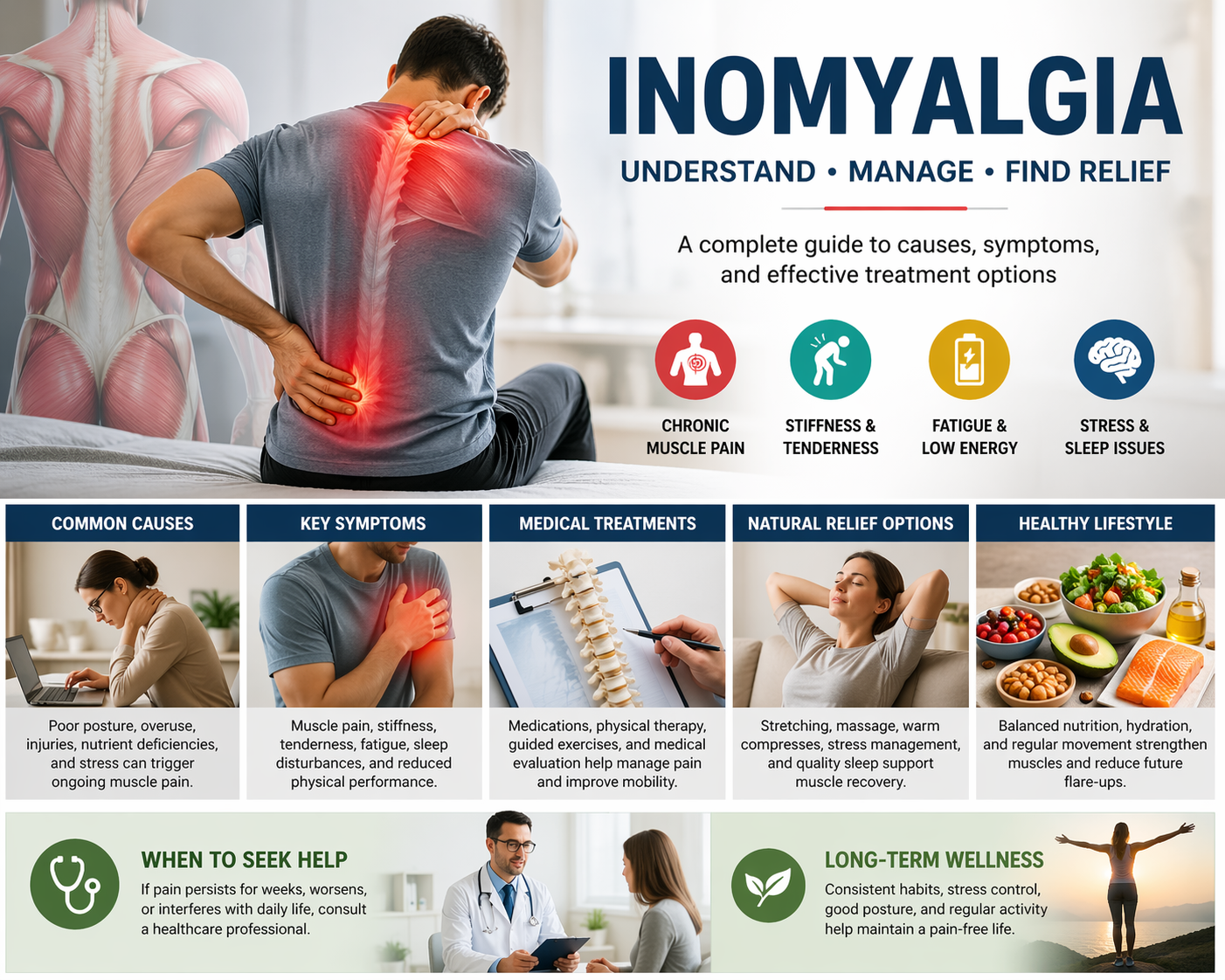
Inomyalgia is a term often used to describe persistent muscle pain that does not easily go away with rest or basic care. It can feel confusing, especially when discomfort spreads across different parts of the body without a clear injury. We often see people ignore these signs, assuming it is temporary fatigue, but ongoing muscle pain can affect energy levels, sleep quality, and daily productivity.
In this guide, we explain the condition clearly and practically, helping readers understand how it develops, what symptoms to watch for, and how to manage it safely through medical and lifestyle approaches.
What Inomyalgia Means and Why It Affects Daily Life
Inomyalgia refers to chronic or recurring muscle discomfort that may involve stiffness, tenderness, or deep aching sensations. Unlike occasional soreness after physical activity, this condition tends to persist and may appear without an obvious cause.
We notice that it often interferes with normal routines. Tasks like walking, sitting for long hours, or even sleeping can become uncomfortable. Over time, this constant strain can reduce motivation, lower physical performance, and create a cycle where pain leads to inactivity, which then worsens the discomfort.
Early Warning Signs of Inomyalgia You Should Notice
Recognizing early symptoms can make a significant difference in managing muscle pain before it becomes severe. People may initially experience a dull ache in certain muscle groups that gradually spreads or intensifies.
We often observe stiffness in the morning, reduced flexibility, and a feeling of heaviness in the body. Some individuals also report mild swelling or sensitivity when touching affected areas. Fatigue is another common sign, as the body works harder to cope with continuous discomfort.
These early signals should not be ignored, especially if they last longer than a few weeks.
Common Triggers Behind Ongoing Muscle Pain
Chronic muscle discomfort rarely appears without underlying reasons. In many cases, repeated strain from poor posture or long hours of sitting contributes to muscle imbalance. Physical overuse, especially without proper recovery, can also lead to persistent pain.
We also see that minor injuries, even those that seemed harmless at the time, can evolve into longer-term discomfort if not properly treated. Additionally, nutritional deficiencies, especially low levels of essential minerals, may weaken muscle function and increase sensitivity.
Understanding these triggers allows individuals to make adjustments before the condition worsens.
How Stress and Sleep Problems Make Symptoms Worse
Mental stress plays a major role in how the body experiences pain. When stress levels remain high, muscles tend to stay tense for extended periods. This tension reduces blood flow and increases discomfort.
Sleep issues further complicate the situation. Poor sleep prevents proper muscle recovery, making pain feel more intense the next day. We often find that individuals with irregular sleep patterns report higher levels of body stiffness and fatigue.
Addressing both stress and sleep quality is essential for reducing the overall impact of muscle pain.
Inomyalgia and the Difference From Normal Muscle Soreness
It is important to distinguish between Inomyalgia and normal muscle soreness. Regular soreness usually occurs after exercise or physical exertion and fades within a few days. It is a natural response to muscle use and often improves with rest.
In contrast, this condition persists beyond the typical recovery period. Pain may appear without activity or continue despite rest. It may also involve multiple muscle groups at once, making it harder to pinpoint a specific cause.
Recognizing this difference helps avoid delays in seeking proper care.
Medical Ways to Manage Inomyalgia Safely
Managing Inomyalgia often requires a combination of medical guidance and supportive therapies. Doctors may recommend pain-relief medications or anti-inflammatory treatments to reduce discomfort and improve mobility.
Physical therapy is another effective approach. Guided exercises help strengthen muscles, improve flexibility, and restore balance in the body. In some cases, healthcare providers may suggest diagnostic tests to rule out underlying conditions contributing to chronic pain.
We emphasize the importance of following professional advice rather than relying solely on self-treatment.
Natural Habits That Support Recovery
Alongside medical care, simple daily habits can significantly support recovery. Gentle stretching helps reduce stiffness and keeps muscles active without causing strain. Warm compresses or light massage can improve blood circulation and ease tension.
We also encourage maintaining a consistent routine. Small, regular movements throughout the day prevent muscles from becoming overly tight. Avoiding long periods of inactivity is key to managing discomfort effectively.
These natural methods, when practiced consistently, can improve overall muscle health.
Foods, Hydration, and Movement for Better Muscle Health
Nutrition plays a vital role in how muscles function and recover. A balanced diet that includes essential vitamins and minerals supports tissue repair and reduces inflammation. Hydration is equally important, as muscles require adequate fluids to maintain flexibility and prevent cramps.
We often advise combining proper nutrition with moderate physical activity. Activities such as walking or light stretching keep muscles engaged without overloading them. This balanced approach helps maintain strength while reducing the risk of worsening pain.
When to Seek Professional Help for Inomyalgia
There are times when muscle pain requires medical attention. If discomfort persists for several weeks, spreads across the body, or interferes with daily life, it is important to consult a healthcare professional.
We also recommend seeking help if pain is accompanied by unusual symptoms such as severe fatigue, weakness, or unexplained swelling. Early evaluation can help identify underlying causes and prevent complications.
Ignoring persistent pain may lead to more complex health issues over time.
Long-Term Strategies to Reduce Future Flare-Ups
Preventing recurring muscle pain involves consistent lifestyle adjustments. Maintaining good posture during daily activities reduces strain on muscles. Regular physical activity keeps the body flexible and resilient.
We also highlight the importance of managing stress through relaxation techniques and maintaining a stable sleep routine. These factors play a direct role in how the body responds to physical discomfort.
By adopting these strategies, individuals can reduce the likelihood of future flare-ups and maintain better overall well-being.
Conclusion
Inomyalgia is more than simple muscle soreness. It reflects a deeper pattern of ongoing discomfort that requires attention, balance, and proper care. With early recognition, thoughtful lifestyle changes, and appropriate medical support, it is possible to manage symptoms effectively and regain comfort in daily life.